
Program Analysis Product
Research program offices
Program analysis sites: evidence you can audit
Per-program analytical sites where every quantitative claim links to a reproducible source and a stated confidence level.
See the engagementKevin Boyack and Dick Klavans have spent three decades learning to map research from the way papers cite each other. Their topic model is built into Elsevier's SciVal. At Syntheos we rebuild the map from 1.7 billion citation links and use it on the question in front of you, whether you're choosing what to fund or watching where a field is heading.
We work for research funders, foundations, medical schools, and defense and policy offices. Clients include DARPA, the Andrew W. Marshall Foundation, and Georgetown.
The map, checked against what happened
We rebuilt the map as it stood at the end of 2018 and flagged the fields it showed gaining ground, the ones growing fastest and drawing citations from more of science each year. Then we looked at where those fields were six years later.
Of the 1,830 fields it flagged, 514 broke out, outgrowing nine in ten of their peers. That's more than one in four, nearly three times the rate across all fields. The lower a field scored in 2018, the less likely it was to break out.
mRNA vaccines were on the 2018 list. That community held Katalin Karikó's 2005 paper on modified RNA, which won the Nobel Prize in 2023, and its output grew sevenfold by 2024.
The flag misses plenty. It caught 28% of all the fields that broke out, so most breakouts weren't on the 2018 list. And most of the signal is momentum. Growth in papers alone did nearly as well as our full score.
Share of fields that broke out by 2024
| Tenth of 2018 signal | Broke out by 2024 |
|---|---|
| 1 | 3% |
| 2 | 4.9% |
| 3 | 5% |
| 4 | 5.8% |
| 5 | 6.8% |
| 6 | 7.8% |
| 7 | 9.6% |
| 8 | 11.7% |
| 9 | 17.3% |
| 10 | 28.1% |
A portfolio on the map
We took ARPA-E's public record of 113 awards and the 899 papers they acknowledge, and placed every paper on the map. The awards spread across 307 research communities. Fewer than one pair in a hundred shares any ground at all.
The ground they share most is a method, machine learning for materials discovery. Six awards working on batteries, superconductors, alloys and hydrogen all publish there. A breakthrough in that one community would lift all six. That makes it a strong candidate for the next dollar, and no program chart would point you there.
Machine learning for materials discovery
We traced every paper ARPA-E's awards cite back to where it was written. Chinese institutions produce 31 percent of that research, against 19 percent of the world's output.
In lithium-metal batteries, which 28 awards draw on, Chinese institutions write 62 percent of the papers and American ones write 12. Reading that work is good science. The question is where capacity at home is thin enough to matter, and the map answers it before a supply shock does.
Hydrogen evolution catalysts · 21 awards draw on it
Lithium-metal batteries · 28 awards draw on it
CO₂ reduction to fuels · 33 awards draw on it
Machine learning for materials · 32 awards draw on it
Every portfolio has places like these. Some are deliberate and some nobody planned. Send us yours and we'll show you which is which.
Map your portfolioThe map
Each dot is one of 102,903 research communities at the finest level of the map, placed by how their papers cite each other. Fields that read each other sit close together.
Each dot is a research community, colored by discipline.
Click any community to open its full profile in the explorer.
The citation record under the Map of Science. We follow every link between papers in the global scientific literature to find its research communities.
Every quantitative claim in a deliverable cites its source. Program analyses also carry a ledger entry with the query that produced it.
Written by the Syntheos team across science mapping, AI policy, computer security and privacy, and research security, in venues including Nature, Scientific Data, Quantitative Science Studies, Scientometrics, Research Policy, PLOS ONE and eLife.






Engagements end in whatever the decision needs, from a briefing to a system the client runs for years. Each of the four below solved a different shape of problem.
Per-program analytical sites where every quantitative claim links to a reproducible source and a stated confidence level.
See the engagement
A strategic assessment platform that quotes its sources word for word and backs each key judgment with dated predictions that get scored.
See the engagement
A teaming platform in classroom use at Georgetown. The AI listens quietly and helps on request, while phase gates, peer review, and a twelve-rule delegation contract keep every real judgment in student hands.
See the engagement
A research pathway explorer that lets users chart and narrate routes between research communities on a global map of science.
See the engagementAssessments and decision tools built to survive Congressional oversight and meet the standards the DoD AI office is setting.
View Defense CapabilitiesDARPA, CSET, Marshall Foundation, Noble Reach
Competitive Assessment, Technology Scouting, Decision Architectures
Available through direct award, OTAs and BAAs
Every engagement begins with a decision someone has to make and stand behind, in a field too large to read unaided. Most end in a briefing or a written assessment. When a question keeps coming back, we build the tool that keeps answering it, and the last four below are tools we built that way.
Most engagements end here. A briefing on a research field, a portfolio review, or an assessment of an emerging technology, delivered to the people deciding and written to hold up when someone asks how you know. Built on the Map of Science and read by people who've worked in the field.
Example: our quantum technology briefing
What a program's work did once it left the program office, who picked it up and where it went. Delivered as an assessment, or as a live site that keeps the picture current. Every number carries a reproducible query and a confidence level.
Proof: research program offices
A strategic assessment platform you run yourself. Every cited quote is checked word for word against a frozen snapshot of the sources, inference is marked as inference, and each key judgment is backed by dated predictions that get scored when they resolve. Our analysts review the key judgments by hand against the sources before an assessment goes out. Built for standing strategic-assessment and competitive-intelligence work.
Proof: Deepfield
Research consoles over specialist corpora. A researcher asks a question and gets an answer cited to the page, with figures that separate what the sources say from what the model inferred. We build a knowledge graph over the corpus when the questions need one. Built for institutions that want researchers to think with a corpus as well as read it.
Proof: Andrew W. Marshall Foundation
Orchestrated AI assistance with human judgment in the loop. A delegation contract constrains what the AI is allowed to do, and database-level phase gates enforce it. Built for learning environments and decision-critical work where the AI must help but never decide.
Proof: Georgetown SEST
The form follows the decision. The evidence trail behind it is the same in every engagement.
Send us one decision and the material behind it. We run our methods on it and walk you through the result. There's no fee.
By the end of the walkthrough you'll know whether we showed you something you couldn't see before, and we'll give you a fixed price for the full engagement.
Send us a decisionA research area or a portfolio
A map of the research communities it touches, and where the open ground is.
Read the business caseAn emerging technology you have to decide on
A briefing on where the field is heading, who leads it, and what it depends on.
Read the business caseA program name or a BAA
An assessment of what the program's work did once it left the program office.
Read the business caseOne strategic question
A first-pass assessment with the evidence and the assumptions laid out.
Read the business caseFifty documents from your corpus
Answers to your questions about them, cited to the page.
Read the business caseWe take one on when the decision is consequential, the structure behind it is hard to see, and the person who owns it will be in the room for the walkthrough.
These are the people who own the decisions we work on, in the domains the team came up through. The question changes from one to the next. The job stays the same. We show where to act and make sure the choice survives scrutiny.
Which programs to start and which to end. The portfolio then has to be defended to Congress, the press, and the next administration. We bring quantitative portfolio analysis, science mapping, growth-trajectory forecasting, and AI-assisted research-opportunity discovery to the call before it's made and to the audit that follows.
Explore capabilitiesWhere a single grant will move a research community, and where it will vanish. Foundations make that call over long horizons, and the decision has to outlast the staff who made it. We've mapped funding portfolios across decades, modeled where a grant moves a field, and built research tools over specialist archives.
Explore capabilitiesWhich lines of translational research to back, and what the clinical evidence supports. We do translational research forecasting, research-funding portfolio analysis, and clinical-evidence synthesis for medical schools, biomedical agencies, and clinical specialty boards. It's built on years of running a research-intelligence operation inside an academic medical center.
Explore capabilitiesWhich emerging technologies deserve attention now, and where research security is exposed. We do AI research-trend analysis, research-security assessment, and long-horizon emerging-technology forecasting, informed by years of work at the institutions that set this policy. The vocabulary, the methodology, and the relationships are our own.
Explore capabilitiesWhere an advantage can be built or lost over a long competition. Competitive assessment demands synthesis across military, economic, and technological domains over long time horizons. Traceable reasoning. Explicit assumptions you can challenge, test, and refine.
Explore capabilitiesThe domain matters less than the shape of the decision. We ask three questions. Does the decision carry real money or mission consequence? Is the structure that should drive it hidden from the people making it? Could seeing that structure change the answer? Three yeses and we should talk.
Explore capabilitiesSyntheos is a small firm by design. Every engagement is staffed by principals — people who came here from the places where high-stakes decisions are actually made.
The Office of Naval Research. The Office of the Secretary of Defense. The MacArthur Foundation. Sandia. The Naval Research Laboratory. CSET. The University of Michigan Medical School. Between us we have decades of peer-reviewed work in science mapping, research evaluation, science policy, AI policy, computer security and privacy, and research security.
You don't get handed off to a junior team. You get the people whose names are on the papers.
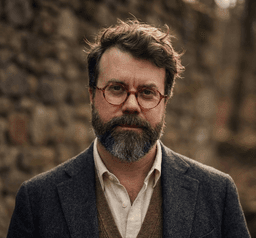
Founder & CEO
We start with the decision, before any data. Who has to make the call, and who will press them on it? Those answers set the scope of the work and the form the answer should take.
Then the analysis. We work from the Map of Science, the literature itself, your own data where it matters, and the people who know the field. What the evidence settles, we say plainly. Where it runs out, we say that too.
The answer comes in the form you'll use. Often that's a briefing for the people deciding, or a written assessment they can circulate and defend. When the same question keeps coming back, we build a tool your team runs itself. Every claim traces back to its source, whatever the format.
We stay close after delivery to answer the questions the work raises. Sometimes that's where it ends. More often the first answer shows a client a question they couldn't have asked before, and they bring us back to go after it.
These are the questions that come up when we talk to leaders who've seen enough vendor pitches to be skeptical. They're worth asking of anyone in this space, including us.
AI projects often fail because they're framed as technical projects when they're actually organizational change projects. Someone buys a platform, a team builds models, the models perform well on test data, and then nothing changes. The decisions get made the same way they always did, by the same people, using the same inputs. The AI sits on the side, technically functional and organizationally irrelevant.
The usual culprit is starting from the wrong end. "We have all this data, what can we do with it?" is a recipe for building impressive demos that don't matter. So is "leadership wants an AI initiative." These projects optimize for what's measurable by technologists, like model accuracy, processing speed, and data coverage. Decision-makers care about whether they can trust an output, explain it to their boss, and defend it when something goes wrong. F1 scores are not on that list.
We start from the other end. A specific decision that matters, made by specific people, who answer to specific stakeholders. What evidence do they need? What does defensible look like in their world? Where does their current process break down? The technical architecture follows from those answers, not the other way around.
This is less exciting than a general-purpose AI platform. It's slower to show results in a demo. But it's the difference between a system that gets used and a system that gets abandoned.
No. Every organization has messy data. Legacy systems that don't talk to each other. Inconsistent formats across departments. Critical knowledge that lives in someone's head or in email threads that never got documented. Across our team's prior work and our Syntheos engagements, we have worked with a wide range of data hygiene. None of it has been a dealbreaker.
Human decision-makers work with imperfect information every day. That's the job. You rarely have complete data, perfect consistency, or full confidence in your sources. You make the best call you can with what you have, while staying aware of what you don't know. Good analysis should work the same way.
What matters is whether you can see where your data is weak. The dangerous systems are the ones that ingest whatever they're given and produce confident-looking outputs. You get a false sense of reliability because the mess is hidden from view. We take the opposite approach. Surface the gaps, make uncertainty explicit, track provenance so you know where each piece of evidence came from and how much weight to give it.
Sometimes the most valuable early output is just showing decision-makers where their evidence base is weak. We treat that as the system working as intended. You can't improve what you can't see, and you can't account for risks you don't know exist.
Syntheos does unclassified work today, and most engagements never require direct access to your sensitive materials. Much of our analysis runs on open literature, patents and funding records. When a tool has to work with your own sources, such as proprietary research or internal records, we build it to integrate with them without Syntheos touching the contents.
We set up development environments using synthetic data repositories that mirror the structure and behavior of your actual sources. We build and test the entire workflow against that synthetic layer. When you deploy internally, your team swaps in the real data sources. From the system's perspective, the interface is identical, because it was built to that interface from the start.
Your data never leaves your control.
Every source has errors or the potential for error. Ours included. There's no infallible oracle we're secretly plugged into. We'll get something wrong at some point.
But that's true of every input you use to make decisions, including analysts, reports, databases, and advisors. How we handle this in daily life without being paralyzed is that we learn what sources are good at and what they're not. You might have a colleague who's brilliant at technical analysis but terrible at reading organizational politics. You learn to trust her on the first thing and verify her on the second.
The trick is to fail predictably. Everything we deliver shows its work, so you can learn what you can trust without validation and what needs a second look. Then we make verification as fast as possible, surfacing the reasoning, the sources, and the assumptions so you can check them without digging.
Whether an answer comes from us, from a tool, or from your own analysts, you should always know how it was reached. When you're called to defend a decision of consequence to a board, a commander, a regulator, or the press, "the AI told me to" is never going to be sufficient. You need to own the decision. Our job is to make sure you can.
A large data science team can be as much hindrance as help. Across our team's prior work, we've watched projects fail with twenty engineers and succeed with two people who deeply understand the decisions being made. The difference is almost never technical capacity.
The real requirements are domain expertise and organizational willingness. You need people who know what a good decision looks like in your context, who can tell us when the system's outputs don't pass the smell test, and who have enough authority to actually change how decisions get made. Usually that's a senior analyst, a program lead, or a section chief. Not a machine learning team.
When an engagement includes a tool, we handle the technical build. Understanding of your decision environment is your contribution. We'll ask a lot of questions early on, and the quality of your answers matters more than your technical stack.
If we leave a tool behind, we train your team to run and extend it. We size that to your reality. Some clients have dedicated analytics groups who want to own the infrastructure. Others have one overworked analyst who needs something that just works. Both can succeed. The failure pattern we see is when organizations treat this as a technical project and staff it with engineers who don't have the domain credibility to push for adoption. A working system that nobody uses is worse than no system at all.
Two things set us apart. The first is the evidence. A strategy firm's analysis rests on interviews, desk research and judgment. Ours rests on a model of the whole scientific literature, about 1.7 billion citation links, read by people who've spent careers in the fields our clients fund and defend. Every claim we deliver traces back to the papers, grants and data behind it, so you can check it yourself or hand it to someone who will.
The second is the form. Most of our engagements end the way a good advisory engagement does, in a briefing or a written assessment for the people deciding. When a question keeps coming back, like a quarterly portfolio review or an emerging technology watch, we can also build the tool that keeps answering it, so you aren't paying for the same snapshot every six months.
We're a small team of researchers and former program leaders. The people who scope your question are the people who do the analysis.
Work with no decision behind it. A feed that summarizes the week's new papers is useful, and so is a general-purpose assistant for staff. Good vendors do nothing else, and neither job needs what we're unusually good at. We do build drafting tools and research consoles, when someone has to stand behind what comes out of them.
We also pass when the decision has already been made and the work is to justify it. Our value comes from showing structure that could change the answer. If nothing we find can move the call, an evidence ledger attached to a foregone conclusion helps no one.
The work we want has a consequential choice at the center and a field too large for any one expert to hold. A funder splitting a budget across six emerging technology areas fits. So does a program manager who needs to know whether a proposed program occupies open ground, and which research communities it would set moving. It helps if the decision owner is willing to be surprised.
Tell us about the decision you're trying to improve. We'll schedule a briefing with our principals to understand your environment and see whether the fit is right.
Schedule a briefing